Showing posts with label News. Show all posts

Saturday, 23 October 2010

The changing face of advertising

I was lucky to attend a creative networking lecture this week by Patrick Burgoyne, the editor of creative review. I was excited to see what the lecture would be about and was surprised that the topic of the lecture was exactly the same as my proposed dissertation topic. My question is: What implications des the instantaneous nature of social media have on brands which want to develop their identity? In particular, is the recent Gap campaign an example of how companies are trapped into never updating their current identities?

When researching my dissertation it is clear that if the consumer purchases branded products over commodity products they are probably buying the brands image, values and beliefs. If the brand changes, seemingly to the consumer overnight, then they will be instantly shocked by the abrupt change. This will in turn, create strong emotions. They were perfectly happy with the brand identity before, and they saw no reason to change the logo so why have they? Thousands of people jump to the conclusion "I could have designed that myself in Microsoft Word" This I doubt, i'm a graphic designer and I struggle to even move images in Word.

The consumer has become increasingly demanding with the increase of choice in the market. They expect a lot from global brands and importantly, they expect their opinion to be valid. Should Brand managers take into consideration the consumers instant reaction and stop the brand development (like Gap) or ignore the uproar and trust that their design is strong enough to ultimately improve the brands sales?
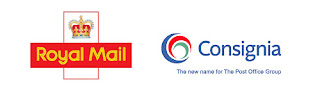
To answer this question we have to ask ourselves, is it a successful identity change or not? If we look back at Consignia (this was what the Post Office re-named itself in 2002) Market research showed that the consumers hated it, and most didn't know that Consignia was even part of the post office at all. This is probably the most important part of a re-brand, that the customers know the re-brand actually took place. TV shows jumped on the re-brand and recorded the audiences reaction and eventually the Chief Exec decided to scrap the name. If social media and blogging was around I doubt it would have taken over a year to make the decision to scrap it. It wasn't a successful rebrand.

I tried to find an example of when a re-brand has had initial hatred but eventually succeeded and a perfect example is the Guardian re-brand. There was mass outcry at how awful it was and how much of a shame it was to loose the traditional design for the new modern edition. Are audiences just reacting to the initial shock of a brand image change?
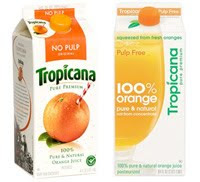
Bloggers loved the Herbal Essences re-brand and their sales increased by 20%, but they hated the Tropicana rebrand and they lost 20% of their sales. It seems obvious but these opinions are the opinions of the customers, so surely, Brand managers should have online reaction factored into their development plans? But what if the audiences are just shocked and can't see the future positive aspects of the change? Should Brand mangers be transparent about their plans to re-brand?

With the invention of online social networks it has become clear that there is a new need for companies to manage the consumer reaction to a re-brand more effectively online. I hope to answer this in my dissertation... watch this space.

Sunday, 5 September 2010

Social media is for people, not brands

Interesting view point in Marketing week by Mark Ritson

http://www.marketingweek.co.uk/disciplines/digital/social-media-is-for-people-not-brands/3017669.article

A passport to a vintage Britain

Britain's new passport designs proposed for next year have now been unveiled. There has been opposing views on the new designs some impressed, others disappointed.


Agency De La Rue collaborated with the Identity and Passports Service's product design team to produce the new designs. It features picturesque qualities of Britain such as seagulls, acorns, butterflies, choppy seas, ferns and cottages. Another recurrent theme is the weather. It features weather symbols depicting page after page as a cloudy day, with patches of sunshine day. This seems very peculiar to me... it almost seems like an advert for the british holiday for people that are leaving the country. "Hey, I know your'e going to Majorca for the sunshine but look what Britain's got for you, good old traditional stormy weather"

It also includes famous places like white cliffs of Dover, the Gower peninsula, Ben Nevis and the Giant's Causeway. The row of houses can easily be a scene from a psychedelic drug trip in the 70's but it's actually the opening page of the new passport. There are no references to modern urbanised Britain rather the nostalgia of a good old remote British village ,where everyones know each other's names. How sweet.

Thursday, 2 September 2010

Regulating social media marketing


Social media marketing is becoming increasingly popular with marketers and this has increased the popularity with the bodies governing the marketers.

The Advertising standards authority (ASA) has announced that corporate use for social media will come under the same rules as TV, press poster, radio and newspaper ads. The ASA has stated that it has "protection of children and consumers at its heart". The decision was made after they received over 4,500 complaints from the public which they could not deal with as it was not in their responsibility.

The new rules will come into effect 1st March next year. The ASA will regulate marketing in all areas of digital marketing, including the company’s own website and microsites. More attention will be given to social media marketing on sites such as Facebook, MySpace or Twitter. The new rules will mean that all online marketing will have to be responsible, legal, honest and truthful. They will concentrate on adverts which sell products rather than ones with editorial content.

Virgin Media's broadband speed advertising

Virgin Media have stood up against broadband speed advertising claiming that audiences find the advertised speeds misleading. Only 9% of respondents in a survey for Virgin Media said that they believe that broadband advertising is accurate and 93% of audiences believed that they should only be able to advertise the average received broadband by the majority of customers. All broadband providers tend to advertise speeds “up to” a certain speed. In July, Ofcom found that only 46% of the advertised broadband speed was being received.

The ASA banned an advert by BT, which claimed that the 20Mbps service was consistently faster than its 8Mbps, after they found it to be misleading. Virgin media have now promised to advertise to customers exactly what they are receiving on average each month.

Jon James, executive director of broadband at Virgin Media, stated: "People are paying for faster and faster broadband but being ripped off by unscrupulous providers who can't deliver their promised speeds to even a single customer”

Well James, I bought your virgin media services last month and you advertised the fastest broadband around… any chance of me receiving this soon?

Wednesday, 18 August 2010

Book adverts on TV (bad ones)

It isn't often that you see book adverts on TV. Unless it's a collection of books from WHSmith or Jordan's new autobiography. So when an advert for James Patterson's book collection appeared at primetime tonight this made me think how strange it is and notice the considerable gap in the market.

When I looked into Patterson I found out that he used to be in advertising, which explained a lot. Unsurprisingly, he was the chairman of America's largest advertising agency, J. Walter Thompson. I found that he ferociously scrutinises the designs of his book jackets and pours money into his marketing campaigns out his own pocket.

So why aren't book adverts rife on TV? In 1992, Patterson's own publisher refused to fund a TV advert which shows how adverse the industry is to TV advertising. As an advertising genius he can clearly see the benefit of advertising to a mass medium which the book industry does not. He went on to fund his own advert and the book was so successful that it has now been transformed into two films starring Morgan Freeman.

But even with all the experience Patterson's campaign is a collection of pretty awful Americanised adverts. They make me cringe....


Find more videos like this on The James Patterson Community

Wednesday, 11 August 2010

New Arena in Leeds


Due to great public demand, Leeds is getting a new Arena. The Leeds Arena will have one of the most striking and unique Arena designs in Europe. Using an ever-changing kaleidoscope of coloured lights, the honeycomb design will act as a commanding gateway to Leeds city centre and come ‘alive’ at night.


Sunday, 25 July 2010

In or out?

Two websites with interesting theories on in-house design. Should it be in-house or outsourced?


http://www.howdesign.com/designawardgalleries/

Wednesday, 21 July 2010

The Helvetica Killer


Type designer Bruno Maag of Dalton Magg believe Helvetica's hype and usage is, to say the least, overrated. Not only this, but he dislikes the whole concept and design of the typeface. We all have our own pet hates. For most of us it is'nt that far-fetched. We all hate it when someone has a crack at a corporate poster using comic sans because "it looks friendly"

He dislikes it so much he took the time to design his own reaction to the typeface: Aktiv Grotesk. He wants this to be both an improvement and alternative to Helvetica.

Do Typefaces really matter?

This article from the BBC questions the use of Typefaces. Branding is one thing that baffles the general public.

"80,000 on some text - why don't they just use Times new roman? I do"

Because then you wouldnt know your Carling from your Carlsberg.