Showing posts with label Photography. Show all posts

Wednesday, 3 September 2014

Unexpectedly nice typography from KFC


Ahead of its 50th anniversary, KFC has launched this lovely new marketing campaign to promote their slow cooked, original BBQ chicken. Just about everything from this campaign screams 'trendy'. The distressed chalkboard typography, the south-american music and the summer feeling photography. Even the product itself is in fashion because these days you can't be an 'on-trend' restaurant unless your meat is 'pulled' in someway. Louise Direito, KFC innovation manager says "If pulled pork was the dish of 2014, then 2015 will become the year of pulled chicken. Influenced heavily by both our Kentucky heritage as well as the UK street-food scene, the new range is a labour of love for us." The video featured on the website is also current. The southern-American voice over, plot and hazy style is very reminiscent of the iconic Jack Daniels marketing.

The typography is very similar to recent McDonald's advertising campaign illustrated by Alison Carmicheal. I suspect that the Jack Daniels homely southern roots focus and the McDonald's new focus were key inspirations for this campaign.


It almost seems too cool and trendy for KFC, I love it because I'm a designer but will their die-hard fans feel the same way? I believe it is a bid to draw in new crowds by improving the variety of their menu and bringing it more in-line with current tastes of the 'new generation' market. In that sense I think this campaign works because it speaks to that new audience very effectively.

The responsive site design also looks top-notch and works flawlessly. See the full website here: www.kfcpulledchicken.co.uk/

Friday, 1 October 2010

From streets to tweets

Chris Osburn (Juxtapoz magazine) recently did a talk at Yorkshire creative networks event on 'streets to tweets'. He is a professional photographer based in London who photographs graffiti artists work and sells the photographs. This was seen to be quite controversial with some members of the audience, mainly the graffiti artists. The main question that Osburn put forward was: is the photograph adding to the image or taking away?

He argued his point with the photograph he took for graffiti artist Sickboy. Sickboy uses the image on his promotional material. He claims that his creativity arises from the way he takes the photograph. In this instance the girls add to the image as it depicts how audiences interact with the image. Is this an artform? The graffiti artists would say not. They claim that he is cashing in on others art and using the fact that the art is illegal and they can't make money from it to cash in himself.

However, the street artists are aware that they produce art that can't make money and will be removed, so is it fair for them to scrutinise people taking photos if it is in such a public place? Probably not, even if those photos make the photographer money.

Saturday, 4 July 2009

The Urbis exhibition, Manchester


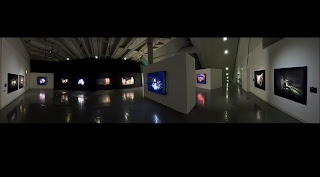
Earlier in the year, I visited a photography exhibition at the Urbis Manchester. Its not very often I go to photography exhibitions and on top of that not very often I am blown away by the works. At my first viewing of the group known as 'Urban explorers' and their photography work I was hooked. The exhibition layout was cleverly completed using back-lit plastic frames to make the photos 'glow'.


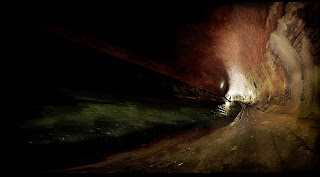
The visually attractive, highly contrasted, wide-angled photography was stunning. What I was most impressed by was the concept. Such a stunning concept; to explore the hidden parts of a seemingly well-known city such as Manchester.


On my recent trip to London it got me thinking about the same project being executed in London. There are many underground tube stations which were closed during the war due to damage and to find and photograph these could produce visually interesting results!

Brompton Road is one of these abandoned platforms situated between Knightsbridge and South Kensington stations. It started service in 1906 when the Finsbury Park to Hammersmith stretch of the Piccadilly Line was opened. It was decided it wasn't needed as there were larger stations nearby and closed on 29th July 1934. It is situated on the Piccadilly line and tubes still pass through but how many people know they are passing through an unused tube station? The station is still lit and remains exactly how it did when it was built in 1906. It still has cinema screens and wartime materials down there from when it was used as a shelter in the war. Since its closure 2 people have accidently fell down the lift shaft and have died, proving how dangerous these unused shafts can be. I wish the Urban explorers could have photographed this station before it was bricked up, unlike the photographer below.